Why Choose Next.js Over React
Comparing Next.js with vanilla React and when the framework's built-in features justify the additional complexity.

In the dynamic landscape of web development, React has emerged as a powerhouse for building interactive user interfaces. Developed by Meta, React's component-based architecture, virtual DOM, and declarative syntax have revolutionized the way developers create web applications.
However, as projects grow in complexity, developers often encounter challenges related to performance optimization, SEO, and server-side rendering. This is where Next.js enters the scene.
Next.js, built on top of React, extends its capabilities by offering SSR, SSG, and other powerful features out of the box. This blog post doesn't aim to take anything away from React -- it is just a comparative study of what Next does better.
SEO Purposes
Google has crawlers -- search engine bots that constantly download and index content all over the internet. The goal is to learn what every webpage is about so that information can be retrieved when needed.
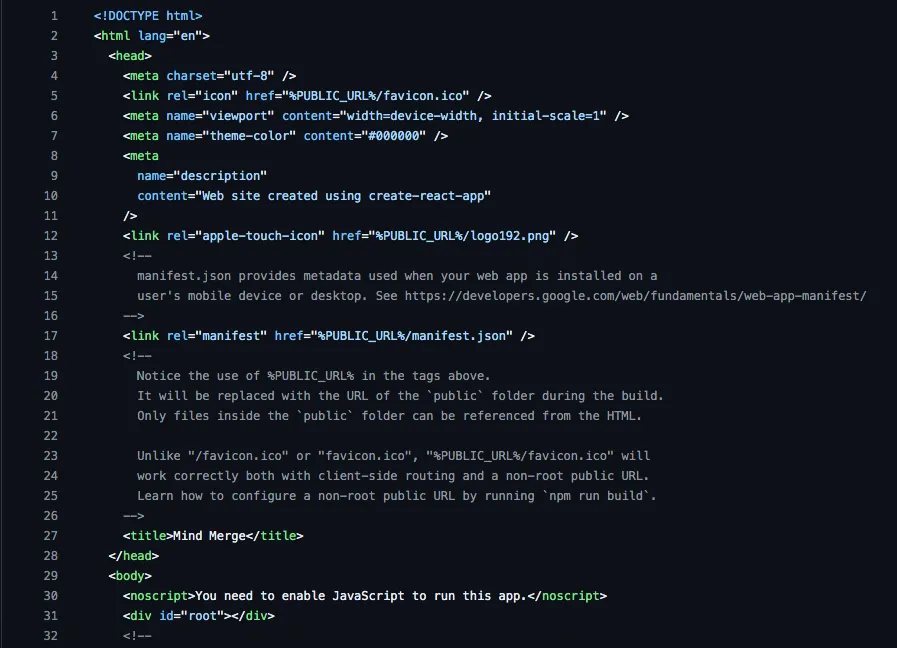
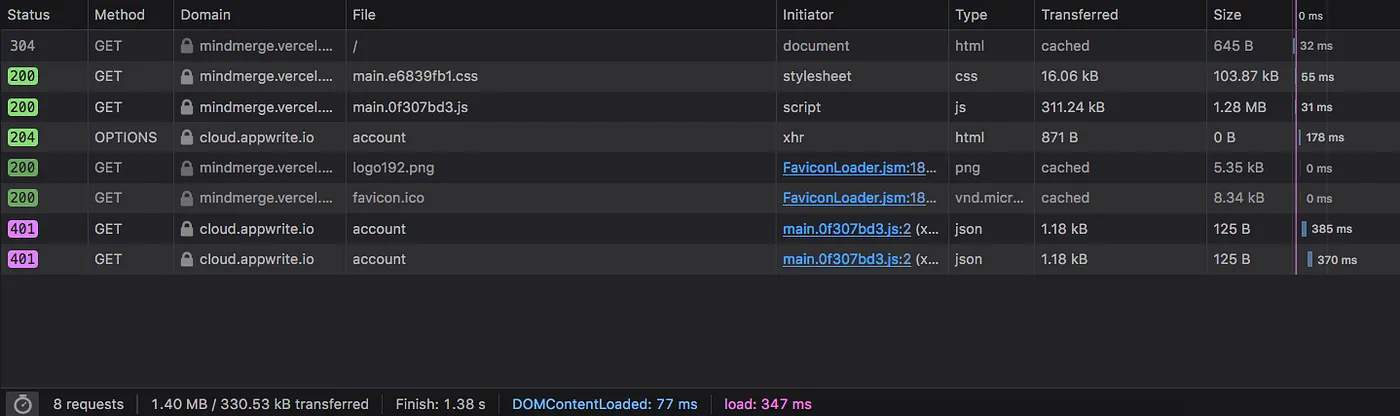
With React, what the crawler gets from a web application's CDN is the top-level HTML file. In a React application, this file doesn't contain details of the content -- only a title. The content is present in multiple JSX files, loaded only after JavaScript executes.
Waterfalling Problem
The waterfalling problem in web development refers to a scenario where data fetching operations are chained to each other, leading to inefficient loading behavior.
What if the initial index.html file could handle the requests? This is what Next.js provides with its SSG and SSR capabilities.
Server Side Rendering (SSR)
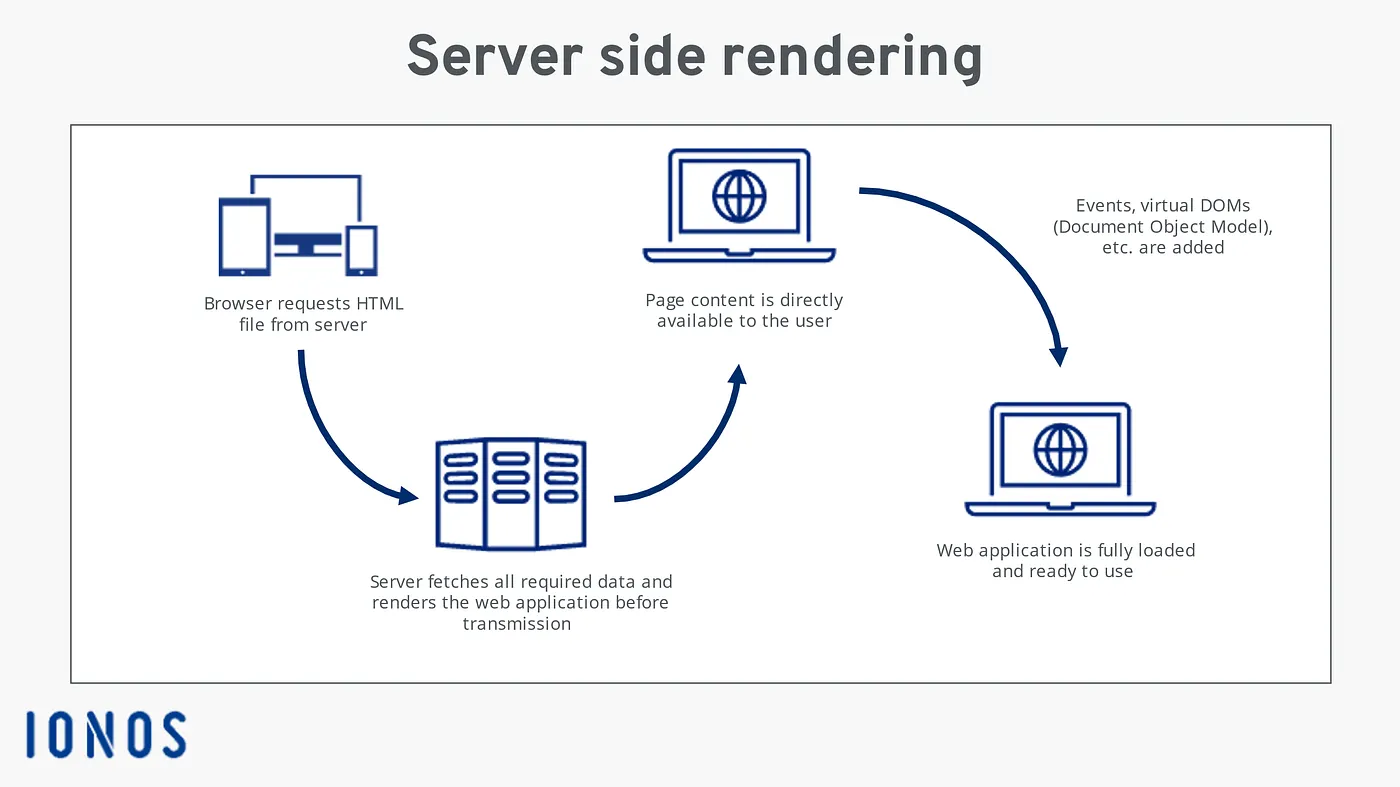
SSR is a technique used to render web pages on the server and send the fully rendered HTML to the client's browser. This is in contrast to CSR, where the initial HTML is sent empty and the browser requests JavaScript files to render the page dynamically.
The benefits of this simple difference are immense:
- Improved Performance and Lesser Loading times
- Search Engine Optimization
- Predictable Processing Performance
- Reduced Compatibility Issues
- More Accurate User Metrics
Static Site Generation (SSG) and Bundle Size Optimisation
SSG is a method of generating static HTML pages at build time, rather than dynamically at runtime. When a user requests a page, the pre-built static files are served directly from the server, without any server-side processing or database queries.
The developer team of Next at Vercel has mastered the art of making your bundle size small. We can do it in React by using a bundler like Vite, but Next provides you with this feature out-of-the-box.
File Based Routing
React doesn't offer out-of-the-box routing capabilities and depends on third-party routing libraries like React Router. File-based routing in Next.js simplifies this by organizing pages as files within a designated directory, allowing for easier dynamic routing using file names with brackets.
Summary of benefits of File-based routing in Next.js:
- Simplicity
- Predictability
- Scalability
- Enhanced Developer experience
- Unified Codebase
Unified Codebase & Full-Stack
Next.js isn't a frontend framework -- it is a full-stack framework. You don't have to write a separate Express application for your web app to be considered full-stack.
Next.js provides built-in support for creating API routes. This eliminates the need for a separate backend server. Next.js applications can be deployed on Vercel, which provides seamless deployment with automatic scaling and continuous deployment.
Downsides

With all great things, there are some downsides. Deployment over a CDN is hard as it has both frontend and backend code. It also needs a server always running to achieve the benefits of SSR, which is resource intensive and costly. Choose according to the needs of the project.